Business Incorporation Advice Surrey BC | Incorporate Now
Business Incorporation Surrey BC

Business Incorporation Advice in Surrey BC for Owners Ready to Incorporate

Business Incorporation Advice in Surrey BC helps owners decide whether a corporation will reduce tax, protect assets, and support future growth. Phoenix Knight reviews your income, cash needs, risk, family roles, and long-term plans before recommending incorporation, so you do not pay for a structure that does not fit your business.

From sole proprietors and contractors to healthcare professionals, consultants, retailers, and real estate investors, we compare sole proprietor and corporate outcomes in plain language. If incorporation makes sense, we handle registration, CRA accounts, banking guidance, bookkeeping setup, and first-year corporate tax planning from one coordinated place for you carefully.

Surrey business owner signing incorporation documents with an accountant at a professional desk
Incorporation Assessment

Should You Incorporate Now or Wait?

Incorporation is not automatically the right move. The value depends on profit level, how much cash stays in the business, liability exposure, family roles, and future plans.

Reasons to Delay Incorporation

Waiting may be smarter if incorporation costs, bookkeeping work, and corporate filing requirements outweigh the benefit.

  • You withdraw nearly all profit personally each year
  • Net income is still modest or inconsistent
  • The business is early-stage and high risk
  • You may close or wind down soon
  • You do not want separate corporate administration yet

The right answer comes from modelling your numbers.

We compare sole proprietor and corporate results before recommending a structure. You can also review should you incorporate your business in BC and sole proprietorship vs incorporation in BC.

Tax Comparison

Corporate Tax Deferral and Owner Income Planning

One of the main reasons owners consider incorporation is tax deferral. A Canadian-controlled private corporation can often pay a lower active business tax rate on eligible income than an owner would pay personally at higher brackets.

What We Model

  • Current sole proprietor tax result
  • Estimated corporate tax result
  • Salary versus dividend options
  • Cash kept in the corporation
  • Extra annual compliance cost

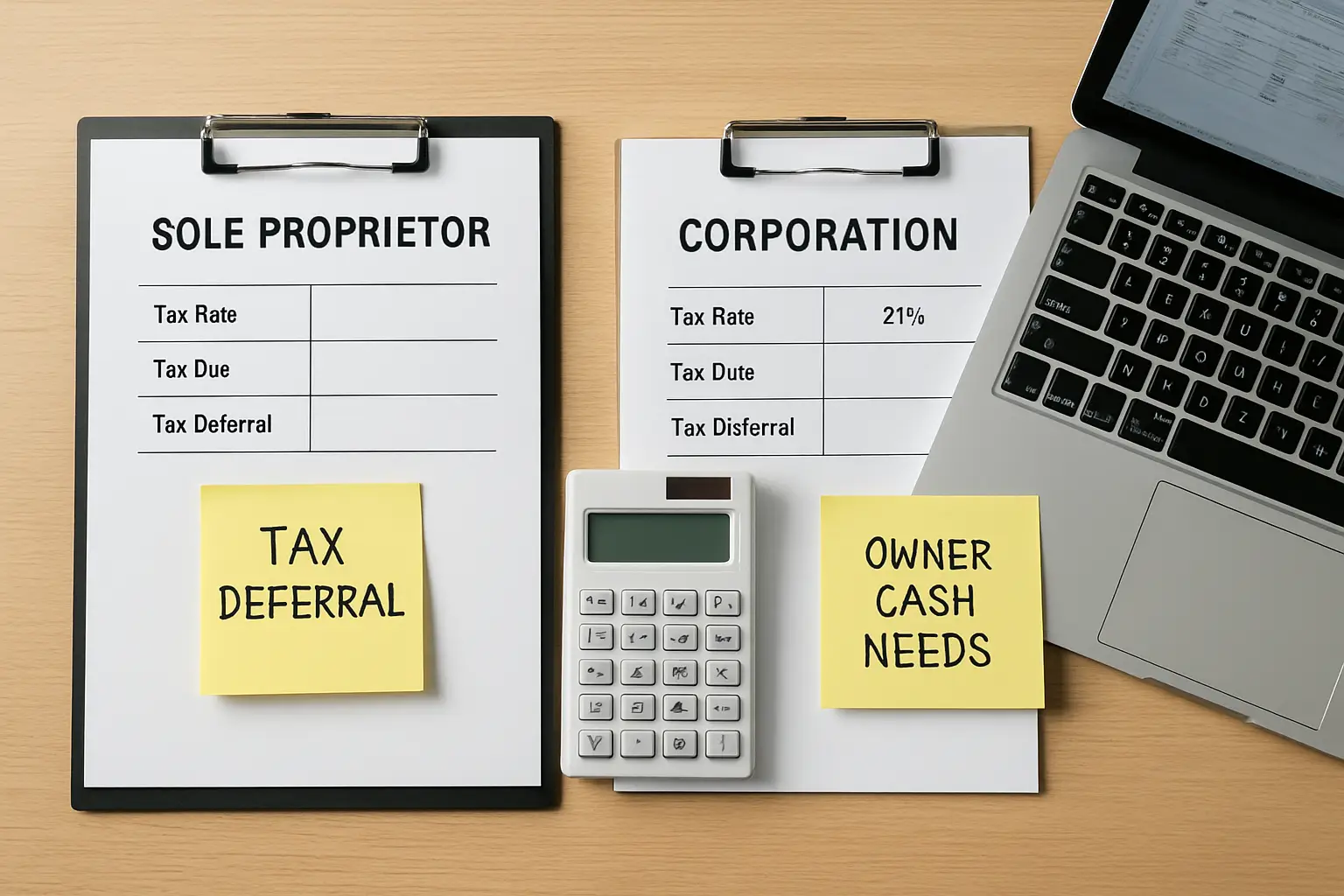
Illustrative example: $150,000 net business profit.

If all income is taxed personally, the tax result can be very different from a corporation that keeps some profit inside the company. We prepare a custom estimate using your actual income, withdrawal needs, and filing situation.

Side-by-side tax comparison showing sole proprietor and corporation outcomes for a Surrey business owner
Protection and Structure

Liability Protection, Credibility, and Long-Term Flexibility

A corporation is a separate legal entity. That can help protect personal assets from some business debts and claims, but it does not remove every risk or every personal guarantee.

Professional Positioning

Some clients, lenders, and larger contracts view corporations as more established and easier to deal with.

  • Corporate supplier requirements
  • Government contract readiness
  • Improved financing presentation
  • More formal business identity

Future Ownership Options

Incorporation can make it easier to add partners, issue shares, plan succession, or prepare for a future sale.

  • Share structure planning
  • Partner entry or buyout
  • Business continuity
  • Succession planning support

Incorporation helps, but it is not a magic shield.

Banks, landlords, payroll remittances, GST/HST, professional negligence, and director duties can still create personal responsibility. We explain the limits before you proceed.

Advanced Planning

Family Compensation, LCGE Planning, and Business Continuity

For some owners, incorporation is about more than current-year tax. It can support family roles, succession planning, and future access to the lifetime capital gains exemption on qualifying small business shares.

LCGE Readiness

A future share sale may qualify for capital gains relief only if the business and shares meet specific rules over time.

  • Qualified small business share review
  • Purification planning discussion
  • Holding company considerations
  • Sale timeline awareness

Continuity and Succession

A corporation can continue beyond one owner, which may support cleaner transitions to family, partners, buyers, or managers.

  • Ownership transition planning
  • Shareholder agreement coordination
  • Estate planning connection
  • Tax estate planning
Incorporation Type

BC, Federal, and Professional Corporation Options

The right incorporation route depends on where you operate, whether your name needs broader protection, and whether your profession has special regulatory rules.

Federal Corporation

A federal corporation may be useful when broader name protection or multi-province growth is part of the plan.

  • Corporations Canada filing
  • Extra provincial registration may apply
  • Helpful for broader operations
  • Additional filing discipline required

Professional Corporation

Regulated professionals often need approval from their college or professional body before incorporating.

  • Physicians and dentists
  • Lawyers and accountants
  • Engineers and other regulated professionals
  • Shareholder restrictions may apply

The corporation type should match your profession and growth plan.

For related tax filing differences, read T1 vs T2 tax returns in Canada.

Complete Setup

Our Five-Step Incorporation Setup Process

We do not simply file documents and leave you to figure out the rest. Our process connects the legal setup, CRA accounts, banking, bookkeeping, and first-year tax planning.

02

Register

We help prepare and file the BC or federal incorporation and organize the formation documents.

03

Set Up CRA

We arrange the business number and required corporate tax, GST/HST, and payroll accounts.

04

Build Books

We guide banking setup and configure QuickBooks, Xero, or another accounting system correctly.

05

Plan Year One

We review salary, dividends, shareholder loans, GST, bookkeeping, and first-year T2 filing needs.

The first year matters most.

Many corporation mistakes start with mixed personal and business transactions, missing CRA accounts, poor shareholder loan tracking, or no salary and dividend plan.

After Incorporation

Corporate Accounting After the Certificate Is Issued

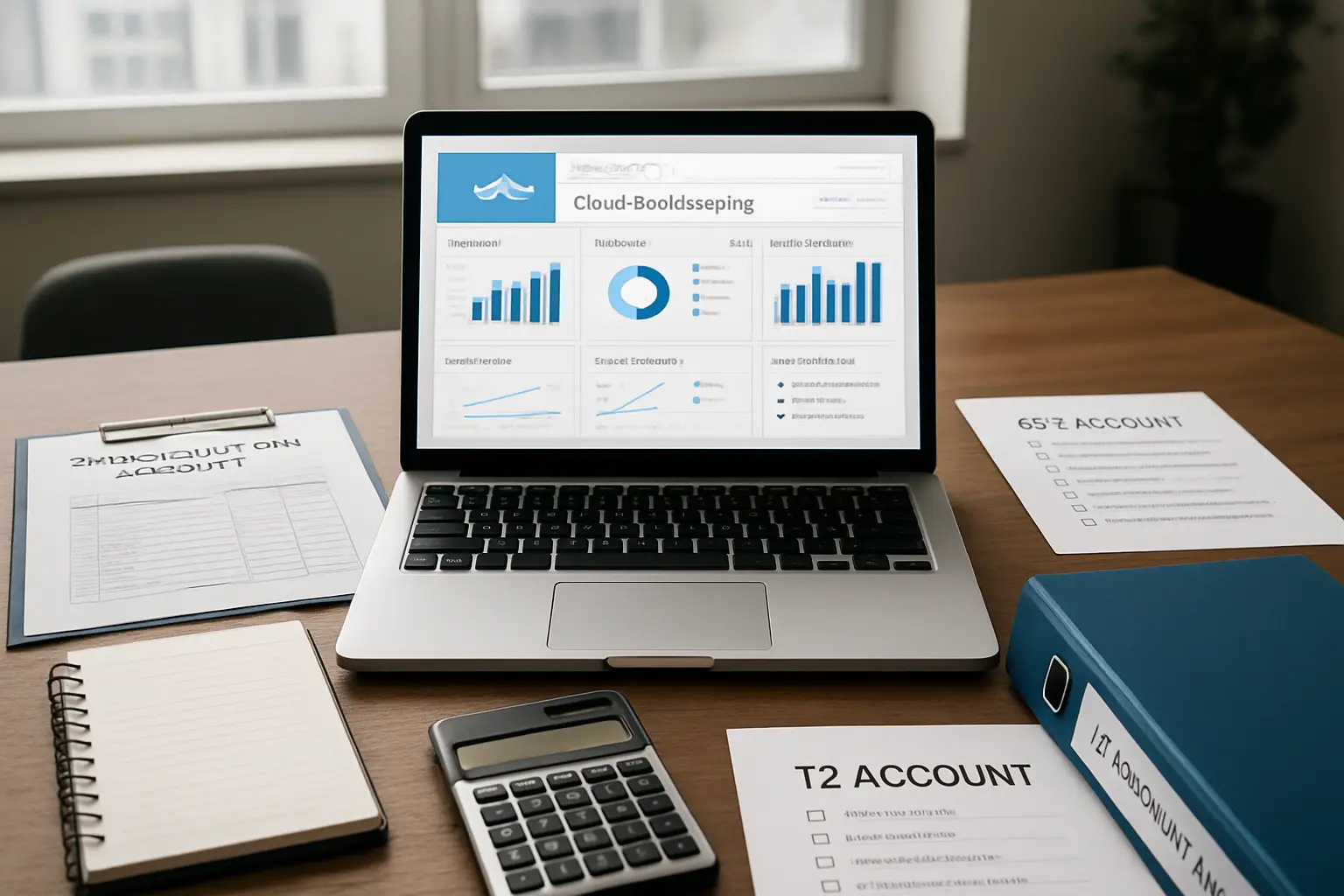
Once incorporated, the business has new accounting duties. The corporation needs its own records, bank accounts, tax filings, shareholder loan tracking, and compensation plan.

What We Provide

  • Monthly or quarterly bookkeeping
  • Annual corporate tax filing
  • Salary versus dividend planning
  • GST and payroll account support
  • Year-end corporate records package

Ongoing support can connect with small business bookkeeping, corporate tax filing, and business advisory.

Corporate bookkeeping setup with shareholder loan tracking payroll notes and T2 filing checklist
Cost and Value

Incorporation Costs and Ongoing Corporate Expenses

Incorporation has both setup costs and annual costs. We compare those costs against expected tax deferral, protection, planning flexibility, and long-term business goals.

Annual Corporate Costs

Corporations need regular accounting, tax filing, registry maintenance, and compensation planning.

  • T2 corporate tax return
  • Monthly or quarterly bookkeeping
  • Annual registry return
  • Salary and dividend planning

Break-Even Review

We compare expected annual savings or deferral against the extra cost of corporate administration.

  • Projected tax difference
  • Extra accounting cost
  • Cash retained in corporation
  • Net benefit estimate

Incorporation should pay for itself or solve a real planning need.

If the numbers do not support incorporation today, we will explain when it may become worth revisiting.

Incorporation Packages

Business Incorporation Advice Packages

Choose the level of support that matches your decision stage, filing needs, and first-year corporate accounting requirements.

Analysis Only

$350

For owners who want a clear yes, no, or not-yet answer before paying for incorporation.

  • Income modelling
  • Sole proprietor versus corporation review
  • Projected savings or cost comparison
  • Written recommendation
  • Timing guidance

First-Year Corporate Support

$3,500-$5,000

For owners who want incorporation, bookkeeping, tax filing, and planning support through the first year.

  • Full incorporation package
  • First-year T2 support
  • Monthly bookkeeping or year-end package
  • Salary versus dividend planning
  • Corporate compliance review
Why Ask Phoenix Knight First

Honest Incorporation Advice Before You Change Your Business Structure

Incorporation affects tax, bookkeeping, banking, liability, future sale planning, and owner pay. We help you understand the full picture before the decision is made.

Setup and Accounting Together

We handle the incorporation and the accounting structure, so your new corporation starts with cleaner records.

Industry-Specific Experience

We support contractors, healthcare professionals, consultants, retailers, investors, and service firms across Surrey and Metro Vancouver.

Incorporation FAQ

Business Incorporation Questions

These answers cover tax deferral, liability protection, CRA accounts, corporate filing, shareholder loans, owner pay, and when incorporation may not be worthwhile.

Should I incorporate my business in Surrey BC?

It depends on profit, personal cash needs, business risk, future sale plans, family involvement, and whether corporate administration is worth the added cost.

Is incorporation better than sole proprietorship?

Not always. Sole proprietorship can be simpler when income is lower, profit is fully withdrawn, or the business is still testing the market.

Can incorporation reduce tax?

It can create tax deferral when profit stays in the corporation. The benefit is smaller when all profit is withdrawn personally each year.

Does incorporation protect my personal assets?

It can help with some business risks, but personal guarantees, payroll remittances, GST/HST, professional duties, and director obligations may still create personal exposure.

What CRA accounts do I need after incorporating?

A corporation usually needs a business number and corporate income tax account. GST/HST and payroll accounts may also be needed depending on activity.

What happens after incorporation is complete?

You need separate corporate books, a corporate bank account, shareholder loan tracking, T2 filing, and annual owner compensation planning.

Free Incorporation Analysis Consultation

Find Out Whether Incorporation Is Worth It Before You File

Bring your current income, expected profit, personal withdrawal needs, business risk concerns, and future plans. We will help you understand whether incorporation is useful now, later, or not at all.

  • Compare your sole proprietor and corporate tax situation.
  • Review cash needs, liability exposure, family roles, and future plans.
  • Discuss BC, federal, or professional corporation options.
  • Connect incorporation with corporate tax filing, bookkeeping, and business advisory.

Serving business owners considering incorporation across Surrey, New Westminster, Metro Vancouver, Langley, Abbotsford, Coquitlam, and the Fraser Valley.

Surrey business owner booking an incorporation advice consultation for tax structure and corporate setup