Transaction Records
Keep business income and expenses categorized consistently using the supporting information available.
- Sales and deposits
- Business expenses
- Bank transactions
- Credit-card activity
- Supporting documents

Bookkeeping services for Surrey businesses help keep financial records current throughout the year instead of rebuilding them when a tax deadline, financing request, or year-end arrives. Phoenix Knight organizes transactions, reconciliations, receivables, payables, GST/HST records, payroll entries, and recurring financial reports around a consistent monthly workflow.
Phoenix Knight Financial Services supports businesses that need regular bookkeeping, cloud accounting workflows, catch-up work, year-end organization, or coordination with accounting, payroll, GST/HST, and tax services. This page is the main bookkeeping service hub; more specialized options are available for small business bookkeeping and outsourced bookkeeping .

Bookkeeping creates the transaction-level foundation used for accounting, GST/HST reporting, payroll records, tax preparation, cash-flow review, and management reporting. The exact monthly scope depends on the accounts, transaction volume, software, payroll activity, and reporting requirements of the business.
Keep business income and expenses categorized consistently using the supporting information available.
Compare accounting balances with external records so differences can be identified instead of accumulating across the year.
Produce recurring financial information after the bookkeeping records for the period have been completed and reviewed.
Bookkeeping focuses on keeping the underlying financial records organized and reconciled. Businesses that need broader month-end accounting, financial statements, or accounting analysis can review Accounting Services .
These services overlap at the transaction level, but the engagement model is different. Choose the option that best matches the amount of work and operational responsibility your business needs.
The main recurring bookkeeping service for businesses that need monthly records, reconciliations, GST/HST information, payroll entries, and reports maintained consistently.
A more structured recurring package for owner-managed small businesses that need straightforward monthly bookkeeping without building an internal finance department.
Explore Small Business Bookkeeping →A broader external bookkeeping relationship for companies that want an outside team to operate an agreed part of the bookkeeping function with defined responsibilities and review controls.
Explore Outsourced Bookkeeping →Project-based work for overdue, incomplete, unreconciled, or disorganized records that need to be corrected before recurring bookkeeping can continue reliably.
Explore Bookkeeping Cleanup →A clean onboarding process defines what Phoenix Knight will handle, what information the business will provide, how documents are exchanged, and what needs to be corrected before normal monthly bookkeeping begins.
Review the accounting software, latest reconciliations, reporting history, and any known bookkeeping issues.
Confirm access to the bank, credit-card, accounting, document, payroll, or other systems required for the agreed bookkeeping scope.
Agree who provides receipts, approves payments, answers transaction questions, manages payroll information, and reviews monthly reports.
Establish document deadlines, reconciliation timing, reporting expectations, and the process for unresolved bookkeeping questions.
If the file contains old unreconciled balances, missing periods, duplicate transactions, or other historical problems, the work can first be scoped through Bookkeeping Cleanup Services before recurring monthly bookkeeping begins.
The monthly workflow should be agreed in advance so the business understands which accounts are included, what records must be supplied, and which reports will be prepared after the period closes.
Monthly bookkeeping can only be completed once required bank activity, receipts, invoices, payroll information, and other records have been provided. The reporting cadence should be agreed during onboarding rather than assuming the same deadline works for every business.
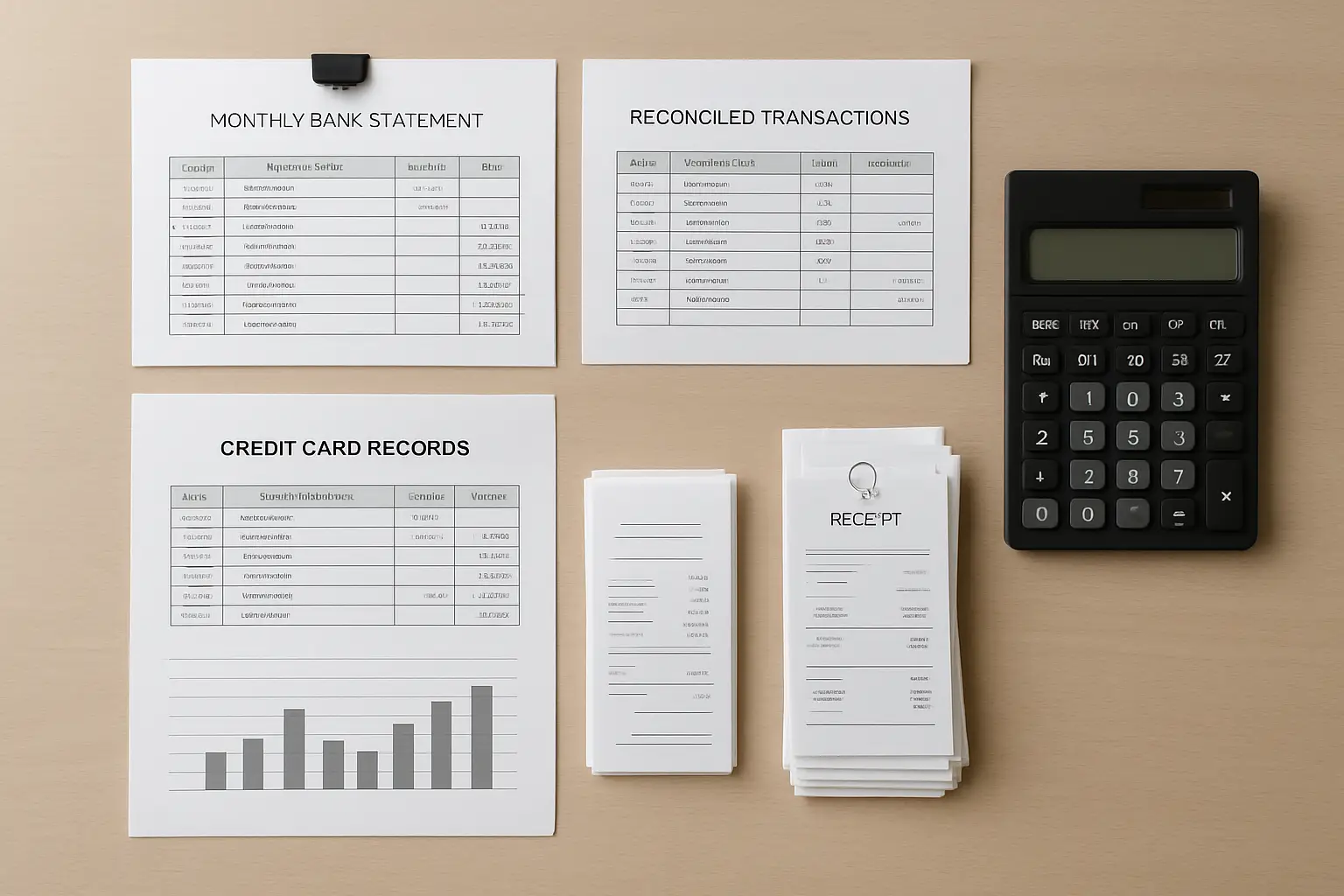
Bookkeeping can also help maintain visibility into customer balances and supplier obligations when A/R or A/P management is included in the agreed service scope.
Keep customer invoices, payments, credits, and outstanding balances organized in the accounting system.
Maintain supplier invoices and payment records so upcoming obligations remain visible.
Current receivable and payable records give owners better information about the money expected to come in and payments that need to go out.
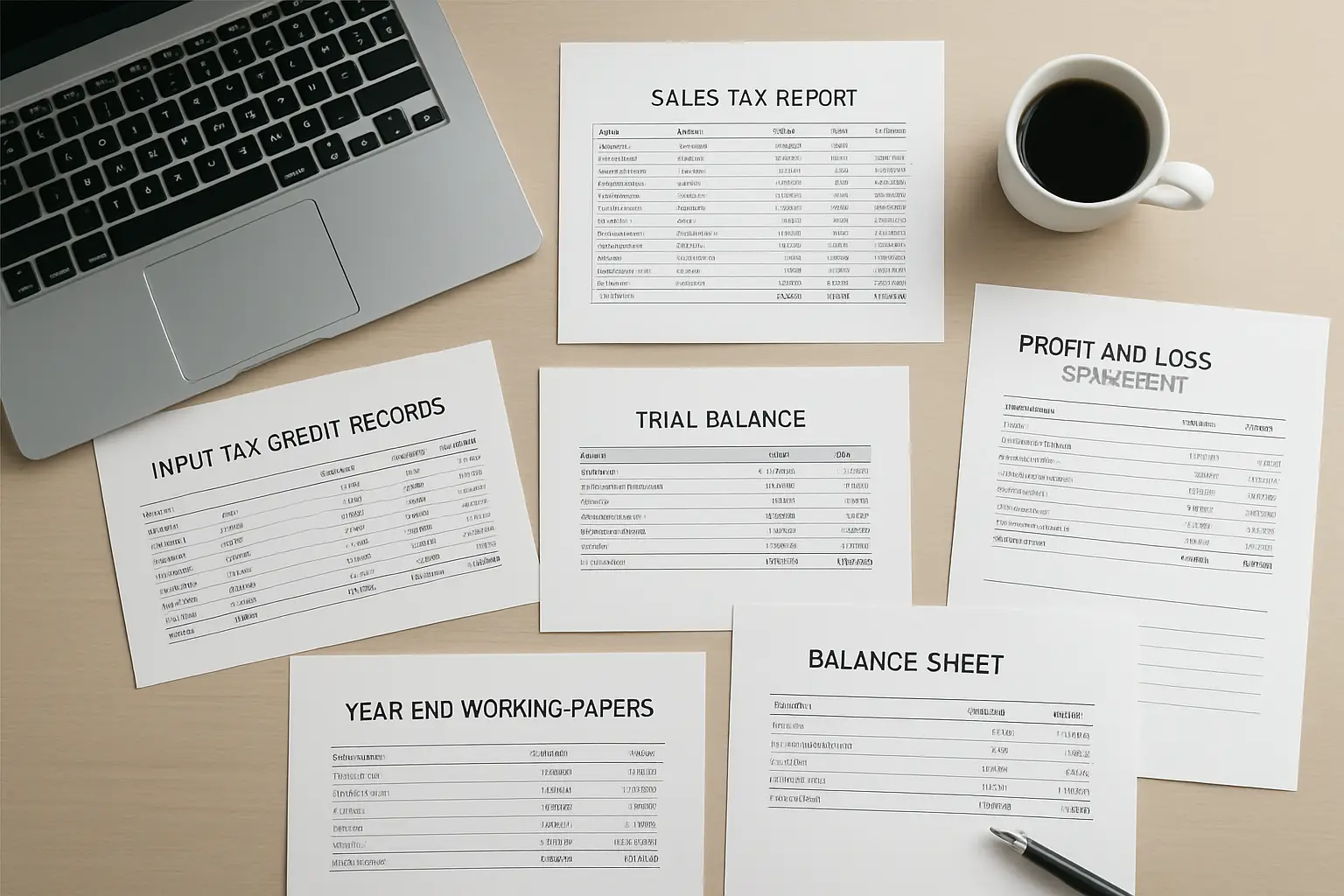
GST/HST and payroll activity should agree with the underlying bookkeeping records. Keeping those balances current during the year reduces the amount of reconstruction needed when filing or year-end work begins.
For filing and payroll processing beyond the bookkeeping records, see GST Filing Services and Payroll Services .
Year-end work is easier when the accounting file has already been reconciled and major balances have been reviewed. The bookkeeping handoff can be organized around the information required by the accountant or tax preparer.
Complete the agreed bank, credit-card, GST/HST, loan, receivable, payable, and payroll reconciliations.
Identify unusual categories, unresolved transactions, shareholder balances, assets, liabilities, or other items needing year-end attention.
Prepare the trial balance, general ledger, relevant schedules, payroll summaries, and GST/HST information.
Provide the agreed year-end records for accounting or tax preparation and respond to bookkeeping-related follow-up questions.
Corporate businesses can connect their year-end bookkeeping records with Corporate Tax Filing . Sole proprietors can review Self-Employed Tax Services .
Recurring bookkeeping works best when the opening balances are dependable. If several months are unfinished or the accounting file contains unreconciled balances and old errors, the first step may be a separate cleanup engagement.
Once the historical records are brought to an agreed starting point, the business can move into a recurring monthly bookkeeping workflow.
Explore Bookkeeping Cleanup Services →Cloud accounting systems can make it easier to keep bank activity, documents, reconciliations, and reports connected. The best system is the one that fits the business workflow and can be maintained consistently.
Bank feeds and automation can reduce manual entry, but account reconciliations, transaction questions, classification review, and month-end checks still matter.

A clear division of responsibilities reduces delays and helps prevent bookkeeping questions from remaining unresolved month after month.
Businesses that want a more fully managed external bookkeeping function with defined handoffs, access controls, review ownership, and recurring service responsibilities should review Outsourced Bookkeeping Services .
Package fit depends on transaction volume, number of accounts, payroll activity, GST/HST requirements, receivables, payables, and the reporting scope required each month.
For owner-operated businesses with lighter monthly activity and straightforward bookkeeping requirements.
For active small businesses that need recurring monthly books, financial statements, GST support, and organized year-end records.
Businesses looking specifically for a structured small-business bookkeeping engagement can also review Small Business Bookkeeping .
For companies with more accounts, payroll activity, receivables, payables, and stronger monthly reporting requirements.
Higher-volume, multi-location, payroll-heavy, or custom-reporting businesses can request a tailored scope. Businesses seeking a broader externally managed bookkeeping function should also review Outsourced Bookkeeping Services .
Good bookkeeping should do more than create a file for tax season. It should keep the underlying financial records consistent enough to support accounting, GST/HST, payroll, year-end work, and day-to-day financial visibility.
Bank, credit-card, and other agreed balances are reviewed against external records rather than relying only on automated transaction feeds.
The account structure and monthly workflow can reflect industries, locations, projects, payroll, GST/HST, and other reporting needs where the records support them.
Current bookkeeping makes it easier to move into accounting, tax preparation, financing discussions, or management reporting without first rebuilding months of financial records.
Bookkeeping cost is affected by transaction volume, number of bank and credit-card accounts, payroll activity, A/R and A/P requirements, GST/HST filing frequency, cleanup needs, reporting complexity, and how consistently supporting documents are provided. For more detail, see our guide to bookkeeping costs in BC .
Answers about monthly bookkeeping, onboarding, reporting, small-business packages, outsourced bookkeeping, GST/HST, payroll, cleanup, and cloud accounting.
Depending on the agreed scope, bookkeeping can include transaction coding, bank and credit-card reconciliations, receivable and payable records, GST/HST tracking, payroll entries, monthly reports, and year-end bookkeeping organization.
Monthly bookkeeping is appropriate for many active businesses because it keeps balances and reports current enough to identify missing information and unresolved items during the year. Businesses with higher transaction volume or more complex workflows may require more frequent processing.
Onboarding may require access to the accounting file, bank and credit-card information, previous bookkeeping records, GST/HST details, payroll information, outstanding receivables and payables, and the process used for receipts and supporting documents.
This Bookkeeping Services page covers the broader recurring bookkeeping service. Small Business Bookkeeping is designed as a more structured monthly package for owner-managed smaller businesses with a defined scope and onboarding process. See Small Business Bookkeeping .
Standard bookkeeping can cover an agreed set of recurring bookkeeping tasks. Outsourced bookkeeping is designed for businesses that want an external provider to take broader responsibility for a defined bookkeeping function, including handoffs, access, review controls, and recurring reporting ownership.
Yes. Historical bookkeeping can be reviewed and scoped separately before recurring monthly work begins. Businesses with overdue, incomplete, or unreconciled records can review Bookkeeping Cleanup Services .
Bookkeeping can include maintaining GST/HST transaction records, tax codes, input tax credit information, and account reconciliations. Dedicated return preparation and filing can be handled through GST Filing Services .
Yes. Payroll entries, payroll liabilities, employer costs, remittance records, and year-end payroll information can be reflected in the bookkeeping records. Payroll processing and related payroll services can be handled separately through Payroll Services .
The current bookkeeping workflow can work with QuickBooks, Xero, Sage, and cloud accounting processes depending on the business setup. The appropriate system depends on transaction volume, integrations, document workflow, reporting needs, and existing records.
Use the main Bookkeeping Services engagement for recurring monthly records, or move into a more specialized bookkeeping, cleanup, accounting, payroll, cloud, or tax service where the business requires it.
Share the accounting software you use, how many accounts and transactions the business has, whether payroll or GST/HST is involved, and whether the books are currently up to date. Phoenix Knight can use that information to determine the appropriate bookkeeping scope.
Start with the records and software you already have. The first review can identify what is usable, what needs cleanup, and what should be included in the recurring bookkeeping scope.