Your Income Has Changed
A new job, raise, bonus, pension, contract work, or another source of income can change your tax picture. Planning can help identify what needs to be reviewed before filing.
Explore Self-Employed Tax Services
Taxes can feel harder when your income, investments, family situation, or savings plans change. You may be unsure whether an RRSP contribution makes sense for tax purposes, how much TFSA or FHSA room you have, which credits may apply, or how a property sale, rental income, retirement, or other life change could affect your return. Phoenix Knight Financial Services provides personal tax planning in Surrey BC for people who want to understand these issues before filing season. With more than 20 years of experience, we help organize the tax information behind financial decisions and identify questions that need review early.

Tax planning becomes more useful when something changes. Reviewing the tax side before a decision is made can help you understand what records, questions, or filing steps may need attention.
A new job, raise, bonus, pension, contract work, or another source of income can change your tax picture. Planning can help identify what needs to be reviewed before filing.
Explore Self-Employed Tax ServicesRegistered accounts have different tax treatment and contribution rules. Your available room, contribution history, withdrawals, deductions, and timing can affect which tax questions should be reviewed.
Buying, selling, or renting property can create tax questions. Records for income, expenses, purchase details, sale information, and changes in property use may become important.
Read the Rental Income Tax GuideMarriage, separation, children, caregiving, or other family changes can affect the information used on a tax return and the credits or planning questions that may apply.
Explore Family Estate PlanningInterest, dividends, capital transactions, and sales of certain property can affect your tax return. Tax planning can help organize income records, transaction information, adjusted-cost information, and reporting questions.
This service focuses on tax treatment and tax records. It does not include recommendations to buy, sell, or hold securities or manage an investment portfolio.
Retirement income, registered accounts, property, and estate decisions can create tax questions that are easier to review before major changes are made.
Explore Tax and Estate PlanningThese accounts have different tax rules. Personal tax planning can review contribution information, available room, deductions, withdrawals, and tax-reporting questions based on your circumstances.
This tax review does not include recommendations about which investments or securities should be held inside an RRSP, TFSA, or FHSA.
RRSP planning may include checking available deduction room, contribution records, income changes, and whether a contribution fits the tax year being reviewed.
TFSA contribution room is personal to you. Contributions and withdrawals affect available room, so records should be checked before additional contributions are made.
FHSA planning can involve contribution room, possible deductions, qualifying withdrawals, first-home goals, and coordination with other registered-account tax questions.
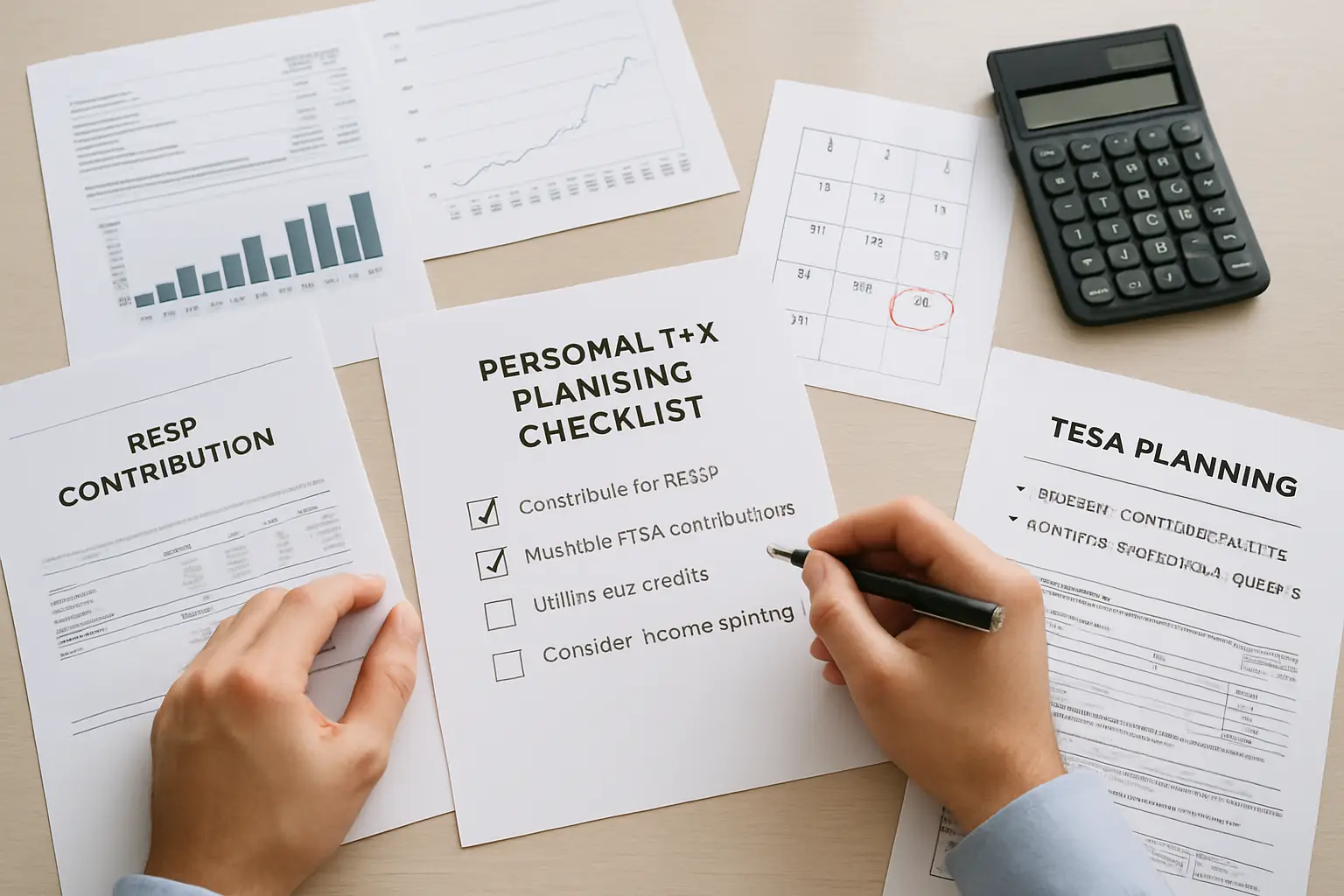
Tax preparation looks at the information needed to prepare a return. Tax planning looks earlier at decisions, changes, records, and tax questions that may affect a current or future return.
Planning can be useful before a major income change, registered account contribution, property transaction, retirement decision, family change, or other event that may affect your taxes.
Explore Tax Preparation ServicesPersonal tax planning focuses on the tax consequences of income, deductions, credits, registered-account activity, property transactions, family changes, and other financial events.
The goal is to identify tax questions, records, filing requirements, and timing issues that should be reviewed. Tax planning cannot guarantee a refund, a particular amount of tax savings, or a specific tax result.
Personal tax planning can review tax questions connected with investment income and transactions, but it does not include recommendations about which securities to buy, sell, or hold or how an investment portfolio should be constructed.
Investment recommendations should be obtained from an appropriately registered professional where required.
Payments from a private business to a spouse, adult child, or another related person should not be treated as a simple income-splitting strategy. Canada's Tax on Split Income rules can apply to certain amounts received from a related business.
Whether TOSI applies depends on the type of income and the person's circumstances. Relevant exclusions can depend on factors such as involvement in the business, age, the type of shares held, and whether another TOSI exclusion applies.
Dividends, interest, and certain other amounts received from a related private business may need a TOSI review before they are included in a family tax plan.
CRA provides exclusions for certain circumstances, including some excluded businesses, excluded shares, and reasonable returns. Eligibility should be reviewed from the actual ownership, involvement, income, and family-business situation.
TOSI generally concerns certain split-income amounts rather than employment salary. Other income-tax and payroll rules can still apply, so the type of payment and the actual working relationship should be reviewed separately.
You may not need every document below. The useful records depend on the tax question, your income sources, and any financial or family changes during the year.
A prior return and notice of assessment can help show carry-forward information and previous tax details.
Employment, pension, investment, rental, contract, and other income records may be useful.
RRSP, TFSA, FHSA, or other registered account information may be relevant to the planning question.
Purchase details, sale documents, rental records, and information about changes in property use may be relevant.
Medical expenses, charitable donations, and other supporting documents may be useful when relevant.
Personal tax planning starts with what has changed, the records available, and the questions that need attention before filing.
Start with changes in income, family, property, registered accounts, investment income, work, or retirement.
Gather the records connected to the decision or event and identify information that may still be missing.
Consider which deductions, credits, contribution rules, reporting requirements, TOSI questions, or filing issues may need attention.
Organize what needs to happen before the return is prepared or before another financial decision is made.
Some tax questions are easier to review while there is still time to gather records, confirm contribution information, or understand how a planned transaction may be reported for tax purposes.
Reviewing an issue early does not guarantee a lower tax bill, a particular tax saving, or a refund. It can help identify the tax rules, records, deadlines, and questions that should be considered before a transaction or filing.
Review general tax-planning questions that may be worth considering before filing time.
Read the Income Tax Planning Guide
Phoenix Knight provides personal tax planning support in Surrey for people reviewing income changes, registered accounts, property, family tax questions, credits, investment-income tax records, and other tax-related decisions.
More information about tax and accounting support available in the area can be found through the Surrey service area .
Find clear answers about registered accounts, changing income, property, family-business income, investment-tax questions, credits, records, and tax preparation.
Tax planning can be useful when your income changes, you are considering a registered account contribution, you buy or sell property, your family situation changes, or another financial event may affect your taxes.
No. Tax preparation focuses on preparing a return from available information. Tax planning looks at tax questions and financial events before or between filing periods.
Yes. Tax planning can include reviewing contribution information, available room, deductions, withdrawals, and how the tax rules for each registered account relate to your circumstances. It does not include recommendations about which securities to hold in those accounts.
The service can review tax questions connected with investment income, registered accounts, and asset transactions. It does not include recommendations to buy, sell, or hold securities or portfolio-management advice.
No. Tax planning can help review tax rules, records, deductions, credits, contribution information, and the tax effects of financial events, but the result depends on your circumstances and the tax rules that apply. A particular refund or amount of tax savings cannot be guaranteed.
Family-business payments need to be reviewed carefully. Canada's Tax on Split Income rules can apply to certain amounts received from a related private business. Whether an exclusion applies depends on the type of income and the person's actual circumstances.
Tax planning can help identify the records and tax questions connected to rental income, property expenses, or changes in property ownership or use.
Marriage, separation, children, caregiving, or other changes can affect tax information and available credits. The details should be reviewed based on your circumstances.
Yes. Eligible medical expenses and qualifying charitable gifts may affect personal tax credits. Receipts and eligibility should be reviewed for the tax year involved.
Yes. Phoenix Knight provides personal tax planning support for individuals and families in Surrey, British Columbia.
Tell Phoenix Knight what has changed in your income, family, property, registered accounts, investment income, or financial situation and which tax questions you want to review.
You do not need to have every document organized before making contact. Start with the information you already have.
Contact Phoenix Knight