Sole Proprietors
Owner-operated businesses may need to bring business income, expenses, GST/HST, bookkeeping, equipment, and other records into the personal tax filing process.

When you work for yourself, income tax, CPP, GST/HST, bookkeeping, expenses, and record keeping can all become part of the same financial picture. Phoenix Knight Financial Services provides self-employed tax services in Surrey BC for sole proprietors, independent contractors, consultants, tradespeople, gig workers, and other people operating an unincorporated business. We help organize business income, expenses, T2125 information, GST/HST records, bookkeeping, tax-payment questions, and the documents needed for a clearer filing process.

Self-employment covers more than freelancing. The records and tax questions can differ depending on whether you operate a trade, consulting practice, professional service, local business, platform-based operation, or another sole proprietorship.
Owner-operated businesses may need to bring business income, expenses, GST/HST, bookkeeping, equipment, and other records into the personal tax filing process.
Contractors may need records for customer payments, tools, materials, subcontractors, mileage, vehicles, equipment, job costs, and GST/HST.
Consultants and professionals may have retainers, project fees, professional costs, software, travel, home-office expenses, and irregular payment schedules.
Platform-based workers may need clearer records for payouts, platform fees, mileage, business expenses, GST/HST, and income received through several payment systems.
If most of your work comes from freelance projects, multiple clients, creator platforms, digital services, or foreign clients, use our more specialized freelancer page.
Self-employed tax preparation can involve business income, deductible expenses, GST/HST records, bookkeeping, supporting documents, and other information in addition to the personal tax return.
Review sales, invoices, contract income, deposits, receipts, expenses, and bookkeeping information before the business portion of the personal return is prepared.
Explore Tax Preparation ServicesDepending on the business, sales records, invoices, GST/HST collected, eligible purchase records, filing periods, and account balances may need separate review.
Explore GST Filing ServicesMissing transactions, incomplete expense records, unreconciled accounts, or old balances may need attention before business income and expenses can be reviewed properly.
Explore Bookkeeping Cleanup
An unincorporated business may receive income through direct customer sales, contracts, professional fees, commissions, online platforms, retainers, e-transfers, card processors, or foreign customers.
The important part is creating a record trail that connects invoices, sales, deposits, processor reports, fees, and other income information without missing or double-counting amounts.
Freelancers are one type of self-employed worker, but the two services are organized around different needs. This page is the broader tax service for sole proprietors and self-employed individuals.
Different businesses create different recordkeeping requirements, but the same foundation applies: complete income records, supported expenses, current bookkeeping, and organized filing information.
Expenses should be reviewed based on the type of purchase, its connection to the business, available supporting records, and any personal-use component. Not every cost is handled the same way.
Home-based businesses may need information about workspace use, household costs, and how the business portion of relevant expenses was determined.
Business vehicle use may require mileage information, fuel, insurance, repairs, and other records that distinguish business use from personal use.
Accounting software, cloud tools, scheduling systems, hosting, business applications, and other recurring digital costs may form part of the expense review.
Computers, tools, machinery, furniture, cameras, and other longer-term assets may need to be distinguished from normal recurring operating expenses.
Professional fees, insurance, advertising, websites, licences, memberships, and related business costs may need supporting records.
Contractor invoices, materials, supplies, project expenses, and other direct costs should be connected to clear invoices and payment records.
Regular bookkeeping can help keep business income, expenses, reconciliations, and supporting records current throughout the year.
Self-employed income may arrive without the same payroll deductions an employee normally sees. That makes it important to understand how business cash, personal tax obligations, GST/HST, and other payments relate to one another.
As taxable revenue changes, review whether GST/HST registration applies and how invoicing, records, reporting, and remittances should be handled.
Explore GST Filing ServicesCPP can form part of the personal tax calculation for self-employed individuals. Expected business income can be considered when planning for year-end obligations.
Depending on the taxpayer's circumstances, instalment payments may become relevant. Planning tax cash separately from normal operating cash can make future obligations easier to manage.
Explore Personal Tax PlanningIncorporation changes the legal, bookkeeping, accounting, and tax structure of the business and should be considered separately from routine self-employed filing.
Explore Incorporation AdviceEmployees and self-employed individuals generally have different income records, business expenses, payment processes, and year-round tax responsibilities.
A consistent recordkeeping process makes it easier to connect income and expenses to the business without reconstructing the entire year during tax preparation.
Keep customer invoices, sales reports, client statements, deposits, contract records, and platform payouts.
Keep invoices and receipts showing what was purchased and its connection to the business.
Keep business bank, credit-card, payment-processor, and transfer records used to support the books.
Maintain records needed to distinguish business use from personal use where applicable.
Keep registration, filing, tax-collected, input-tax, and payment information together where applicable.
Keep invoices and purchase information for computers, tools, equipment, vehicles, furniture, or other larger business purchases.
Many filing problems begin with incomplete records rather than the tax return itself. Identifying the missing or unreliable information first helps determine what needs to happen before filing.
Sales, invoices, transfers, cash receipts, contracts, platforms, and processor deposits may all need to be compared before total business income is clear.
Mixed accounts can make expense review more difficult because individual transactions may need to be separated according to their business or personal purpose.
Old bank balances, incomplete reconciliations, missing receipts, or uncategorized transactions may need cleanup before the tax information is dependable.
Explore Bookkeeping CleanupKeep the CRA notice and gather the records connected to the income, expense, GST/HST, or filing issue being reviewed.
Explore CRA Audit AssistanceWaiting until tax season can make it harder to correct missing transactions, reconcile GST/HST, review major purchases, or understand upcoming tax-payment requirements.
Businesses needing broader recurring accounting support can also review Small Business Accounting .
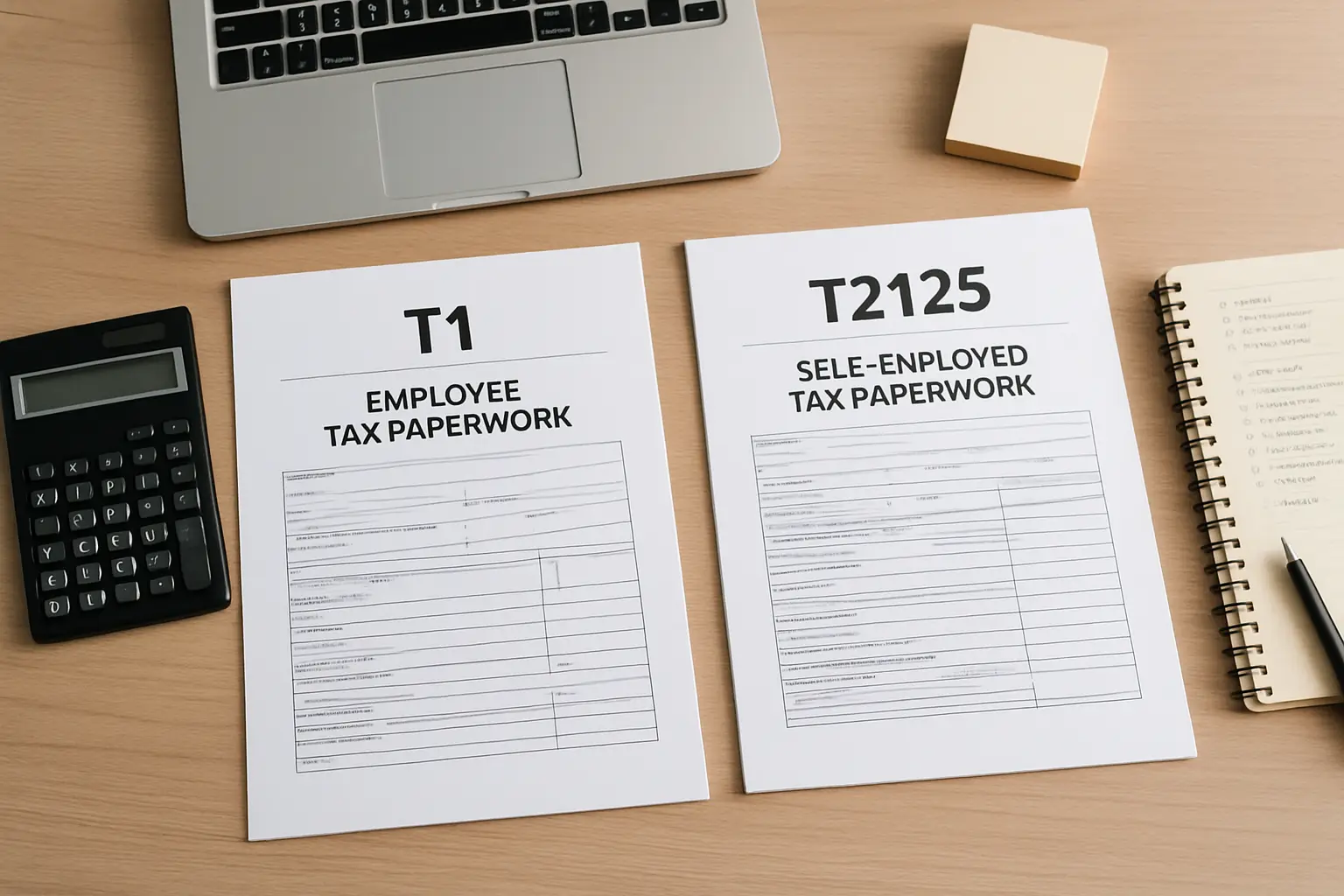
This page is focused on people carrying on business personally. Operating through a corporation creates a separate business structure with its own accounting and corporate tax requirements.
Review the accounting, tax, administrative, and business implications before changing the structure.
A structured review helps separate business income, expenses, GST/HST, bookkeeping, tax-payment questions, and filing information before the return is prepared.
Identify what the business does, how income is earned, whether it is a sole proprietorship, and which records exist.
Review sales, invoices, deposits, receipts, vehicle records, equipment, workspace costs, and other business information.
Identify GST/HST, CPP, instalment, bookkeeping, missing-record, or prior filing questions that need attention.
Bring the organized self-employed business information into the appropriate personal tax preparation process.
Phoenix Knight provides self-employed tax support for owner-operated businesses and independent workers across Surrey. Review the broader Surrey service area or choose a nearby community.
Self-employed tax and record organization for sole proprietors, contractors, and owner-operated businesses.
Self-employed tax, bookkeeping, GST/HST, and business-record support for independent professionals.
Tax support for tradespeople, contractors, sole proprietors, and other owner-operated businesses.
Tax and business-record support for consultants, professionals, and home-based businesses.
Self-employed tax support for independent workers, contractors, and growing sole proprietorships.
More customers, larger contracts, employees, subcontractors, GST/HST obligations, equipment purchases, multiple bank accounts, or more complex bookkeeping can change the type of support a sole proprietor needs.
A growing business may eventually need broader bookkeeping, accounting, tax planning, or incorporation advice beyond the annual self-employed tax return.
Review Small Business Tax Services or Accounting Services when the business needs wider ongoing support.
Get clear answers about T2125 records, sole proprietorships, business expenses, GST/HST, CPP, bookkeeping, freelancers, incorporation, and self-employed income.

This service is intended for people operating an unincorporated business personally, including sole proprietors, independent contractors, consultants, tradespeople, gig workers, and other owner-operated businesses.
Form T2125 is commonly used to report business or professional income and expenses as part of an individual's income-tax return. The underlying income, expenses, and supporting records should be organized before filing.
Self-Employed Tax Services is the broader service for sole proprietors and independent business owners. Freelancer Tax Services is more specifically focused on project-based, multi-client, platform, creator, and digital freelance income. See Freelancer Tax Services .
Keep records of business income such as customer sales, invoices, contract payments, professional fees, platform payouts, direct payments, commissions, retainers, and other amounts earned through the business.
GST/HST requirements should be reviewed as taxable activity changes. Registration, invoicing, filing, and tax treatment can depend on the nature and timing of the business's taxable supplies.
CPP can form part of the tax calculation on self-employment income. The amount depends on the individual's income and the rules applying for the relevant tax year.
Business-use expenses may be relevant where the applicable requirements are met and the business portion is supported by appropriate records. Vehicle and workspace expenses often require a clear distinction between business and personal use.
Start with the records you have. Bank statements, invoices, receipts, payment reports, tax information, and previous accounting files can be reviewed to determine what needs cleanup before filing.
Keep invoices, payment records, currency information, processor reports, and related business records together. The tax and GST/HST treatment can depend on the specific transaction and business situation.
This service is primarily focused on self-employed individuals and sole proprietors. An incorporated business has separate corporate accounting and tax requirements. See Corporate Tax Filing for corporation-specific filing support.
The right service depends on whether the main issue is annual filing, freelance income, GST/HST, bookkeeping, accounting, tax planning, or a change in business structure.
Tell Phoenix Knight what your business does, how customers or clients pay you, where the records are stored, whether GST/HST applies, and which part of the filing process needs attention.
If the main issue is multi-client freelance, platform, creator, or digital-project income, we can also direct you to Freelancer Tax Services .
Your bookkeeping does not need to be perfect before you make contact. Start with the invoices, receipts, bank statements, payment records, and tax information you already have.