Business Incorporation Surrey BC

Business Incorporation Advice in Surrey BC for Owners Ready to Incorporate

Business Incorporation Advice in Surrey BC helps owners review whether incorporation fits their tax, cash-flow, accounting, and long-term business needs. Phoenix Knight Financial Services reviews income, personal cash needs, corporate administration, family-business considerations, and future plans before comparing incorporation with remaining a sole proprietor.

If incorporation makes sense, Phoenix Knight can help coordinate the accounting and administrative steps that follow, including CRA account information, bookkeeping setup, banking-record organization, owner-compensation questions, and first-year corporate tax planning. Legal structure and legal-document questions should be reviewed with qualified counsel.

Surrey business owner reviewing incorporation information at a professional desk
Incorporation Assessment

Should You Incorporate Now or Wait?

Incorporation is not automatically the right move. The financial value can depend on profit, how much cash stays in the business, additional administration, owner cash needs, and future plans. Legal risk and liability questions should be considered separately with qualified legal counsel.

Important Scope

Accounting and Tax Advice Is Different From Legal Advice

Phoenix Knight Financial Services reviews the accounting, tax, cash-flow, bookkeeping, and compliance considerations connected with incorporation. This can include comparing sole proprietorship and corporate tax treatment, reviewing owner compensation, organizing CRA-related information, and preparing the accounting system for a corporation.

Phoenix Knight does not provide legal advice about liability protection, shareholder rights, share-class terms, customized articles, shareholder agreements, contracts, or other legal documents. Those matters should be reviewed by qualified legal counsel. Regulated professionals may also need guidance from their professional regulator and legal counsel.

Reasons to Delay Incorporation

Remaining a sole proprietor may still be practical when the accounting, tax-filing, registry, and administrative costs of a corporation outweigh the expected financial benefit.

  • You withdraw nearly all business profit personally
  • Net income is still modest or inconsistent
  • The business is still testing its market
  • You may close or wind down soon
  • You do not need separate corporate administration yet

Start With the Numbers, Then Review the Legal Structure

Phoenix Knight can compare the tax and accounting side of operating as a sole proprietor or corporation. For additional background, review whether you should incorporate your business in BC and sole proprietorship versus incorporation in BC .

Tax Comparison

Review Corporate Tax Deferral and Owner Income Questions

One reason owners consider incorporation is the possibility of leaving some after-tax business income inside a corporation rather than withdrawing everything personally. The actual result depends on the corporation, the type of income, owner withdrawals, and other tax circumstances.

What We Compare

  • Current sole-proprietor tax situation
  • Estimated corporate tax situation
  • Salary and dividend considerations
  • Cash retained in the corporation
  • Additional annual accounting and compliance costs

Tax Results Depend on Your Actual Numbers

Incorporation does not guarantee a particular tax saving. Phoenix Knight can review estimated outcomes using the owner's income, withdrawal needs, business records, and tax situation.

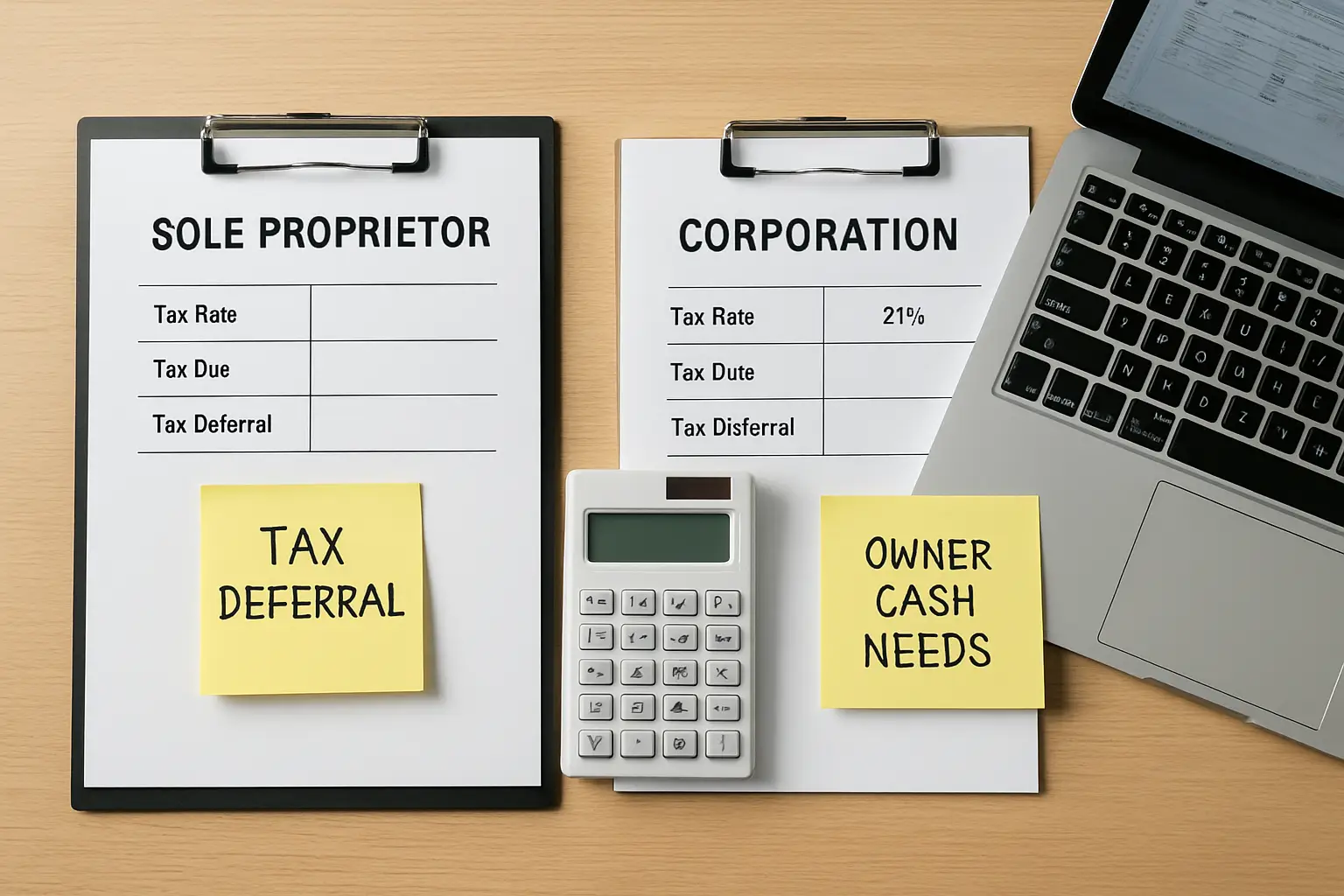
Sole proprietor and corporation tax information being compared for a Surrey business owner
Structure and Risk

Legal Structure, Business Risk, and Long-Term Planning

A corporation is a separate legal entity, but the legal effect of incorporation depends on the circumstances. Phoenix Knight can help identify accounting and tax questions connected with business risk, financing, owner transactions, and corporate records, but does not provide legal opinions about personal liability or asset protection.

Business Administration

A corporation creates a more formal business structure with separate records, banking, tax filings, registry obligations, and owner transactions that need to be tracked.

  • Separate corporate records
  • Separate banking records
  • Corporate tax filing
  • Registry administration

Future Ownership and Tax Questions

Ownership changes can affect accounting, tax, compensation, succession, and corporate records. Phoenix Knight can review those financial considerations while legal ownership rights and corporate documents are handled by qualified counsel.

  • Tax considerations for ownership changes
  • Accounting for shareholder transactions
  • Succession tax questions
  • Coordination with legal counsel
Longer-Term Tax Planning

Family Compensation, Share-Sale Tax Questions, and Succession

Incorporation can create longer-term tax and accounting questions involving family members, future ownership changes, and a possible sale of shares. Each issue should be reviewed from the actual facts rather than assumed to create a tax benefit.

LCGE and Share-Sale Tax Questions

A future sale of qualifying small-business corporation shares can raise questions about eligibility for the lifetime capital gains exemption and other tax rules.

  • Share-sale tax questions
  • Qualified-share eligibility review
  • Corporate asset information
  • Sale-timing considerations

Continuity and Succession

Succession planning can involve tax, accounting, ownership, and legal questions. Phoenix Knight can review the tax and accounting information while legal ownership documents are handled by qualified counsel.

  • Ownership-transition tax questions
  • Accounting records for a transition
  • Estate planning coordination
  • Tax and estate planning
Incorporation Type

BC, Federal, and Professional Corporation Questions

The incorporation route can affect administrative, accounting, tax, registration, and legal questions. Phoenix Knight can review the accounting and tax considerations while legal structure and document decisions are referred to qualified counsel where needed.

Federal Corporation

Federal incorporation can involve different registration and administrative considerations, especially when a business expects to operate across jurisdictions.

  • Federal corporate administration
  • Provincial registration may also apply
  • Accounting and tax setup
  • Ongoing filing obligations

Professional Corporation

Regulated professionals may have additional incorporation, ownership, naming, or authorization requirements established by their professional regulator.

  • Professional-regulator requirements
  • Ownership restrictions may apply
  • Corporate tax and accounting questions
  • Legal review where appropriate

Corporate and Personal Tax Filing Are Different

For a practical overview of the filing distinction, read T1 versus T2 tax returns in Canada .

Incorporation Setup

A Five-Step Accounting and Tax Setup Process

The process connects incorporation-related tax and accounting decisions with CRA accounts, banking records, bookkeeping, and first-year tax planning. Legal structure and legal-document work should be completed with qualified counsel where needed.

02

Coordinate the Incorporation

Help organize business and accounting information for the incorporation process and coordinate administrative filing steps within the services Phoenix Knight provides.

Customized articles, share rights, agreements, and other legal documents should be reviewed by qualified counsel.

03

Organize CRA Accounts

Review the business number and corporate tax, GST/HST, payroll, or other CRA account information that may apply.

04

Build the Books

Organize corporate banking records and configure an accounting workflow using the software selected for the business.

05

Plan Year One

Review salary, dividends, shareholder loans, GST/HST, payroll, bookkeeping, and first-year T2 filing needs.

The First Year Creates New Accounting Responsibilities

Mixed personal and business transactions, incomplete shareholder loan records, missing CRA account information, and unclear owner payments can create extra year-end work. Setting up the records early makes those issues easier to identify.

After Incorporation

Corporate Accounting After Incorporation

Once incorporated, the business has separate accounting and tax responsibilities. Corporate records, bank activity, shareholder transactions, payroll, GST/HST, and tax filing should be kept separate from the owner's personal records.

Accounting Support

  • Monthly or periodic bookkeeping
  • Corporate year-end records
  • Owner-compensation tax questions
  • GST/HST and payroll records
  • Corporate tax filing support
Corporate bookkeeping records with shareholder loan payroll and T2 filing information
Cost and Value

Incorporation Costs and Ongoing Corporate Expenses

Incorporation can create setup costs and recurring corporate expenses. The financial review should compare those costs with expected tax differences, cash retained in the corporation, and the owner's longer-term business needs.

Annual Corporate Costs

Corporations can have recurring accounting, tax, registry, bookkeeping, and owner-compensation record requirements.

  • T2 corporate tax return
  • Bookkeeping
  • Registry maintenance
  • Owner-compensation records

Financial Comparison

Compare estimated tax differences and retained corporate cash with the additional cost and administration of operating a corporation.

  • Estimated tax difference
  • Additional accounting cost
  • Cash retained in the corporation
  • Administration required

Incorporation Should Solve a Real Business or Planning Need

If the financial and accounting considerations do not support incorporation now, the decision can be reviewed again when income, owner cash needs, business plans, or other circumstances change.

Incorporation Packages

Business Incorporation Advice Packages

Choose the level of support that matches your decision stage, administrative filing needs, and first-year corporate accounting requirements.

Analysis Only

$350

For owners who want to review the accounting and tax side before deciding whether incorporation is appropriate.

  • Income modelling
  • Sole proprietor versus corporation review
  • Estimated tax and cost comparison
  • Accounting and tax recommendation
  • Timing considerations

First-Year Corporate Support

$3,500-$5,000

For owners who need incorporation-related setup, bookkeeping, corporate tax, and accounting support through the first year.

  • Incorporation-related accounting setup
  • First-year T2 support
  • Bookkeeping support
  • Salary and dividend tax review
  • Corporate accounting review
Why Ask Phoenix Knight

Review the Accounting and Tax Side Before Incorporating

Incorporation affects bookkeeping, tax filing, banking records, owner compensation, and future financial planning. Phoenix Knight helps review those areas while clearly separating legal decisions that belong with qualified counsel.

Accounting Setup From the Start

Connect corporate banking, bookkeeping, owner transactions, CRA-related records, and tax filing from the beginning.

Clear Professional Boundaries

Phoenix Knight handles accounting and tax questions and refers liability, share rights, customized corporate documents, agreements, and other legal issues to qualified counsel.

Incorporation FAQ

Business Incorporation Questions

These answers cover incorporation tax comparisons, CRA accounts, accounting setup, corporate filing, shareholder-loan records, owner compensation, and the boundary between accounting and legal advice.

Should I Incorporate My Business in Surrey BC?

Incorporation may be worth reviewing when the business has stable income, some profit can remain inside the corporation, or future growth and ownership changes are being considered. Phoenix Knight can compare the accounting and tax implications of incorporation with remaining a sole proprietor. Legal liability and corporate structure questions should be reviewed with qualified counsel.

What Does Business Incorporation Advice Include?

Phoenix Knight's incorporation support focuses on accounting and tax considerations, including comparing sole proprietorship and corporate tax treatment, reviewing cash needs, owner compensation, CRA accounts, bookkeeping setup, shareholder-loan accounting, and first-year corporate tax requirements. Legal questions about share rights, customized articles, shareholder agreements, liability, contracts, and other legal documents should be reviewed with qualified counsel.

Is Incorporation Always Better Than a Sole Proprietorship?

No. A sole proprietorship may remain practical when income is modest or inconsistent, most profit needs to be withdrawn personally, the business is still testing its market, or the additional accounting and corporate administration outweigh the expected benefit.

How Can Phoenix Knight Help With an Incorporation Setup?

Phoenix Knight can help with the accounting, tax, and administrative parts of an incorporation within the services it provides. This may include CRA account information, bookkeeping setup, banking-record organization, shareholder-loan accounting, owner-compensation questions, GST/HST, payroll, and first-year T2 requirements. Legal structure, customized articles, shareholder rights, agreements, and other legal documents should be reviewed with qualified counsel.

What Accounting Changes After a Business Incorporates?

A corporation needs separate books and banking records, a T2 corporate tax return, shareholder-loan tracking, and clear records for salary, dividends, and other owner transactions. GST/HST and payroll accounts may also apply depending on the business.

Does Incorporation Protect All Personal Assets?

Incorporation creates a separate legal entity, but it should not be treated as a guarantee that personal assets are protected in every situation. Personal guarantees, contracts, director obligations, remittance responsibilities, professional liability, and other matters can affect personal exposure. Phoenix Knight can review the accounting and tax implications of incorporation, while questions about liability and legal asset protection should be reviewed with qualified legal counsel.

Can Phoenix Knight Advise on Share Classes or Shareholder Agreements?

Phoenix Knight can review accounting and tax information related to ownership and shareholder transactions. Share classes, shareholder rights, customized articles, shareholder agreements, buy-sell provisions, and other legal documents should be drafted or reviewed by qualified legal counsel.

What If I Am Incorporating a Professional Practice?

Professional corporations may have additional rules established by the profession's regulator. Phoenix Knight can review the accounting and tax considerations, while regulatory approval, ownership restrictions, and legal structure should be confirmed with the applicable professional body and qualified legal counsel.

Incorporation Consultation

Review the Tax and Accounting Side Before You Incorporate

Bring your current income, expected profit, personal withdrawal needs, bookkeeping information, and future business plans. Phoenix Knight can help review whether incorporation fits the accounting and tax side of your situation.

  • Compare sole-proprietor and corporate tax considerations.
  • Review owner cash needs and corporate administration.
  • Identify CRA, bookkeeping, payroll, GST/HST, and T2 requirements that may follow incorporation.
  • Identify legal structure or document questions that should be referred to qualified counsel.

Phoenix Knight's role is accounting, tax, bookkeeping, and incorporation-related administrative support. Legal opinions, shareholder rights, customized corporate documents, contracts, and liability advice are outside that scope.

Surrey business owner reviewing incorporation tax and accounting questions with Phoenix Knight Financial Services