Owners Planning Growth
Review how a growth decision may affect operating costs, cash requirements, staffing, and financial performance before making the commitment.
- Hiring decisions
- Equipment purchases
- New services
- Expansion planning

Business advisory services help owners turn financial information into clearer decisions when revenue is growing but cash still feels tight, reports raise more questions than answers, or the next move feels too expensive to guess. You may be weighing a hire, new equipment, pricing changes, financing, expansion, or an ownership transition without knowing how each choice could affect cash, margins, and future obligations.
Phoenix Knight Financial Services turns accounting information into practical decision support. We help business owners review cash flow, KPIs, budgets, forecasts, growth scenarios, financing needs, and performance trends so they can understand what changed, what needs attention, and which assumptions should be tested before committing money.

Business advisory is useful when accounting reports show the results but do not explain the best next move. Financial and operating information can be used to compare options, identify pressure points, test assumptions, and clarify which decisions need deeper review before cash or resources are committed.
Review how a growth decision may affect operating costs, cash requirements, staffing, and financial performance before making the commitment.
Understand whether the pressure is coming from slow collections, spending changes, payroll, debt, seasonal activity, or the timing of major obligations.
Advisory can help organize the financial questions behind financing, ownership changes, partner discussions, expansion, or a future business transition.
Forecasts and recommendations are more useful when bookkeeping, account balances, receivables, payables, payroll information, and other accounting records are current enough to support the analysis.
Cash flow planning brings expected inflows and outflows into one view so owners can see where timing may become difficult. The model can then be updated as actual results change.
Forecasts are planning models based on assumptions and available information. They are not guarantees of future cash positions.
Explore Cash Flow Forecasting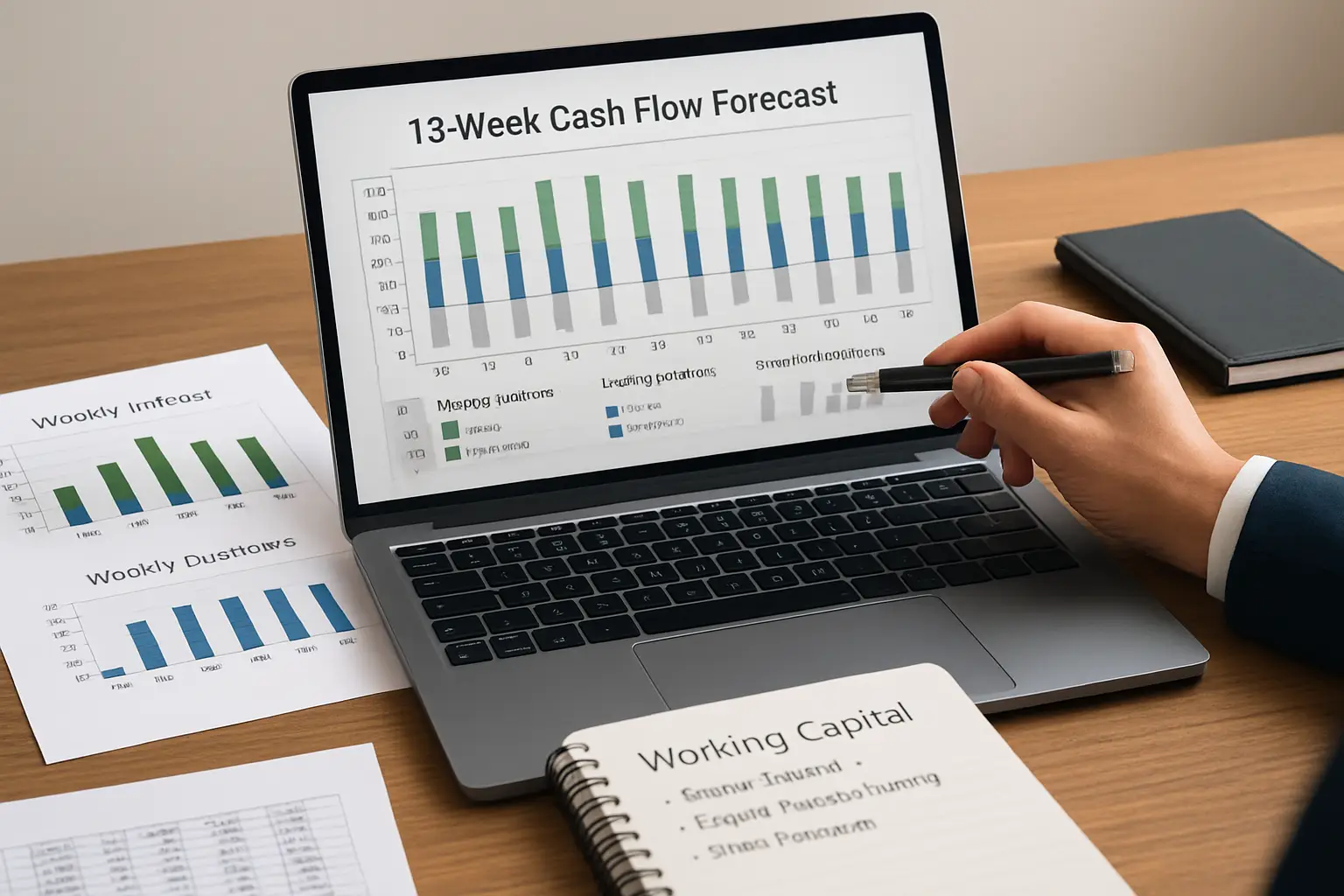

A useful dashboard should make important changes easier to notice. The right KPIs depend on how the business earns revenue, manages costs, collects customer balances, and uses staff or other operating resources.
Hiring, expanding, buying equipment, or launching a service can change both operating costs and cash needs. Financial modelling helps owners compare assumptions before deciding whether a plan deserves further investment.
Review expected revenue, additional fixed costs, setup spending, working capital, and the timing of the investment.
Review wages and other employment costs alongside expected capacity, revenue, cash requirements, and operating needs.
Compare equipment, marketing, technology, and other spending against assumptions about cost, cash timing, and expected business value.

Not every business question needs a recurring advisory relationship. Some owners need help answering one defined question, while others need regular financial reviews as conditions and priorities change.
A project-based engagement focuses on a specific decision, analysis, or planning need with a defined scope.
Ongoing advisory creates a recurring rhythm for reviewing performance, cash, forecasts, priorities, and upcoming decisions.
A defined consulting project can bring financial and operating information together around one question before the owner commits additional cash, staff, financing, or time.
Organize the business model, operating assumptions, financial projections, funding needs, and other information required for internal planning or external review.
Review whether products, services, customers, or contracts generate enough contribution to support labour, overhead, delivery costs, and other operating requirements.
Use financial and operating information to identify where delays, duplicated work, software overlap, or unclear responsibilities may be adding cost.
Compare demand assumptions with rent, staffing, equipment, marketing, setup costs, financing needs, and expected break-even timing.
Review available financial information, working capital, debt, cash requirements, operating risks, ownership assumptions, and post-transaction needs.
Advisory can identify priorities and action items, but the business still needs internal ownership, resources, and follow-through to implement the decision.
Legal, tax, valuation, lending, or other specialist advice may also be required depending on the transaction, ownership structure, financing arrangement, or decision being considered.
Advisory is most useful when reports lead to questions, decisions, and follow-up instead of being reviewed once and forgotten.
Compare the current period with previous results, budgets, forecasts, or other relevant expectations.
Identify changes in revenue, margins, expenses, cash, receivables, payables, or other important measures.
Bring upcoming obligations, investment choices, staffing questions, financing needs, and operating risks into the discussion.
Document what needs attention, who owns the next step, and what information should be reviewed at the next check-in.
A budget becomes more useful when it includes clear assumptions and is reviewed against what actually happened during the year.
Build the plan around expected revenue, operating expenses, staffing, financing, and other known business changes.
Compare results with the plan and identify which variances deserve explanation or action.
Update assumptions when hiring, financing, sales, costs, timing, or other conditions change.
Financing preparation can involve current financial statements, forecasts, cash-flow models, business assumptions, existing debt, and an explanation of how the proposed financing fits the business plan.
Financing preparation does not guarantee approval. Lenders and financing providers determine their own eligibility, documentation, security, and approval requirements.
Explore Financial Advisory Services
A future sale, partner change, family transition, or owner step-back can require cleaner financial records, clearer reporting, and time to identify questions that should be reviewed before a transaction begins.
Review the quality and consistency of revenue, earnings, assets, liabilities, customer concentration, and supporting accounting records.
Identify financial and tax questions that may need further review before an ownership or transaction structure is chosen.
Build a multi-year preparation plan around reporting, financial records, owner responsibilities, operating dependencies, and transition goals.
Explore Tax Estate PlanningAdvisory needs depend on the quality of the underlying records, the complexity of the decision, the number of scenarios being reviewed, and whether the work is project-based or recurring.
Forecasts and performance reviews may require bookkeeping cleanup first when balances or historical records are unclear.
A pricing review may require different analysis from an expansion, financing, partnership, or transition decision.
Decisions involving several assumptions, financing options, operating changes, or timelines may require more modelling.
A defined project has a different workflow from recurring performance, cash-flow, KPI, and planning reviews.
If the financial records are incomplete or several periods are unreconciled, cleanup may need to happen before forecasts and advisory analysis can rely on those figures.
Explore Bookkeeping Cleanup ServicesPhoenix Knight supports Surrey business owners with cash-flow planning, KPI reporting, budgeting, performance reviews, growth modelling, financing preparation, project consulting, and transition planning when financial decisions need more context than standard accounting reports provide.
Explore the Surrey Service AreaFind answers about business advisory, cash-flow planning, growth decisions, financing preparation, project consulting, and ongoing financial reviews.
Business advisory can include cash-flow forecasting, KPI reporting, budgeting, financial projections, growth modelling, financing preparation, performance reviews, project consulting, and transition planning. The exact scope depends on the decision and available financial information.
Bookkeeping organizes completed financial activity. Business advisory uses financial and operating information to review performance, compare future options, identify financial pressure, and support business decisions.
Phoenix Knight can support cash-flow forecasting using available accounting information and assumptions about expected receipts, payments, payroll, debt, taxes, and other business activity.
Advisory can model assumptions behind hiring, equipment, new services, expansion, or other investments so the owner can compare expected costs, cash requirements, and possible financial outcomes before committing.
Project-based advisory focuses on one defined question or deliverable, such as a business plan, pricing review, expansion model, financing preparation, operational review, or ownership decision.
Ongoing advisory uses recurring reviews to monitor financial performance, KPIs, forecasts, budgets, upcoming decisions, and action items as business conditions change.
Financing preparation can include organizing financial statements, projections, cash-flow information, assumptions, and other business information that may support discussions with a lender or financing provider. Approval remains the lender's decision.
Yes. Phoenix Knight provides business advisory support for businesses in Surrey, British Columbia.
Business decisions often depend on reliable accounting records, recurring reporting, and specialist support that keeps the underlying financial information ready for analysis.
Tell Phoenix Knight what decision is in front of you and what financial information is already available. The question may involve cash, hiring, pricing, expansion, financing, performance, a business plan, or a future ownership change.
The initial review can identify which numbers matter, what assumptions need testing, and whether the next step is a defined advisory project or recurring financial review.
Contact Phoenix Knight