
GST/HST Filing Surrey BC

GST/HST Filing Services in Surrey BC for Clearer Returns and Records

GST/HST filing can become stressful when sales grow and records pile up. You may be unsure whether the tax collected matches your books, which purchases support Input Tax Credits, whether registration happened on time, or what to do with an overdue return. Phoenix Knight Financial Services provides GST/HST filing services in Surrey BC for businesses that need help organizing sales, expenses, tax collected, records, and filing periods. With more than 20 years of experience, Phoenix Knight helps contractors, retailers, restaurants, consultants, freelancers, and service businesses turn scattered records into a clearer filing process before GST/HST problems become harder to resolve.

More Than 20 Years of Experience Tax, bookkeeping, GST/HST, and related financial support
Surrey business owner reviewing GST filing and Input Tax Credit records
GST/HST Registration

Know When GST/HST Registration Needs Attention

GST/HST registration is not based simply on annual business revenue. For most businesses, CRA's $30,000 small-supplier test looks at worldwide taxable supplies, including zero-rated supplies, made by the business and its associates. The threshold is tested within a single calendar quarter and over consecutive calendar quarters.

02

Voluntary Registration

A small supplier that makes taxable supplies may choose to register voluntarily. The decision can affect invoicing, record keeping, GST/HST collection, and eligible ITC claims.

  • Business activity review
  • Expense and ITC considerations
  • Bookkeeping impact
  • Cash-flow considerations
Explore Business Advisory
03

Late Registration Support

If taxable supplies crossed the applicable threshold earlier, sales records, associated-person information, and transaction dates may need to be reviewed before the business can determine the appropriate registration date and reporting periods.

  • Prior taxable-supply records
  • Sales and invoice dates
  • GST/HST collected or not collected
  • Previous filing information
The $30,000 Threshold Has Different Timing Tests.
Single-Quarter Test

Over $30,000 in One Calendar Quarter

If taxable supplies from the business and its associates exceed $30,000 in a single calendar quarter, the business generally stops being a small supplier on the supply that causes the total to exceed the threshold.

The effective registration date is no later than that day, and GST/HST generally has to be charged on the supply that caused the threshold to be exceeded.

Consecutive-Quarter Test

Over $30,000 Across Consecutive Calendar Quarters

If the business exceeds $30,000 over the previous four consecutive calendar quarters, but does not exceed the threshold in a single quarter, the registration timing is different.

The business generally stops being a small supplier at the end of the month following the quarter in which the threshold is exceeded. The effective registration date is no later than the first taxable supply made after small-supplier status ends.

What Counts Toward the $30,000 Test?

The calculation generally includes worldwide taxable supplies, including supplies taxable at 0%, made by the business and its associates. It generally excludes consideration from supplies of financial services, sales of capital property, and goodwill from the sale of a business.

GST and PST Are Separate Taxes in British Columbia.

GST/HST registration does not automatically answer every BC PST question. What your business sells and where the supply is made can affect which sales-tax rules need review.

Read the GST/PST Filing Guide for BC Small Businesses
Input Tax Credits

Review Eligible Input Tax Credits With the Records Behind Them

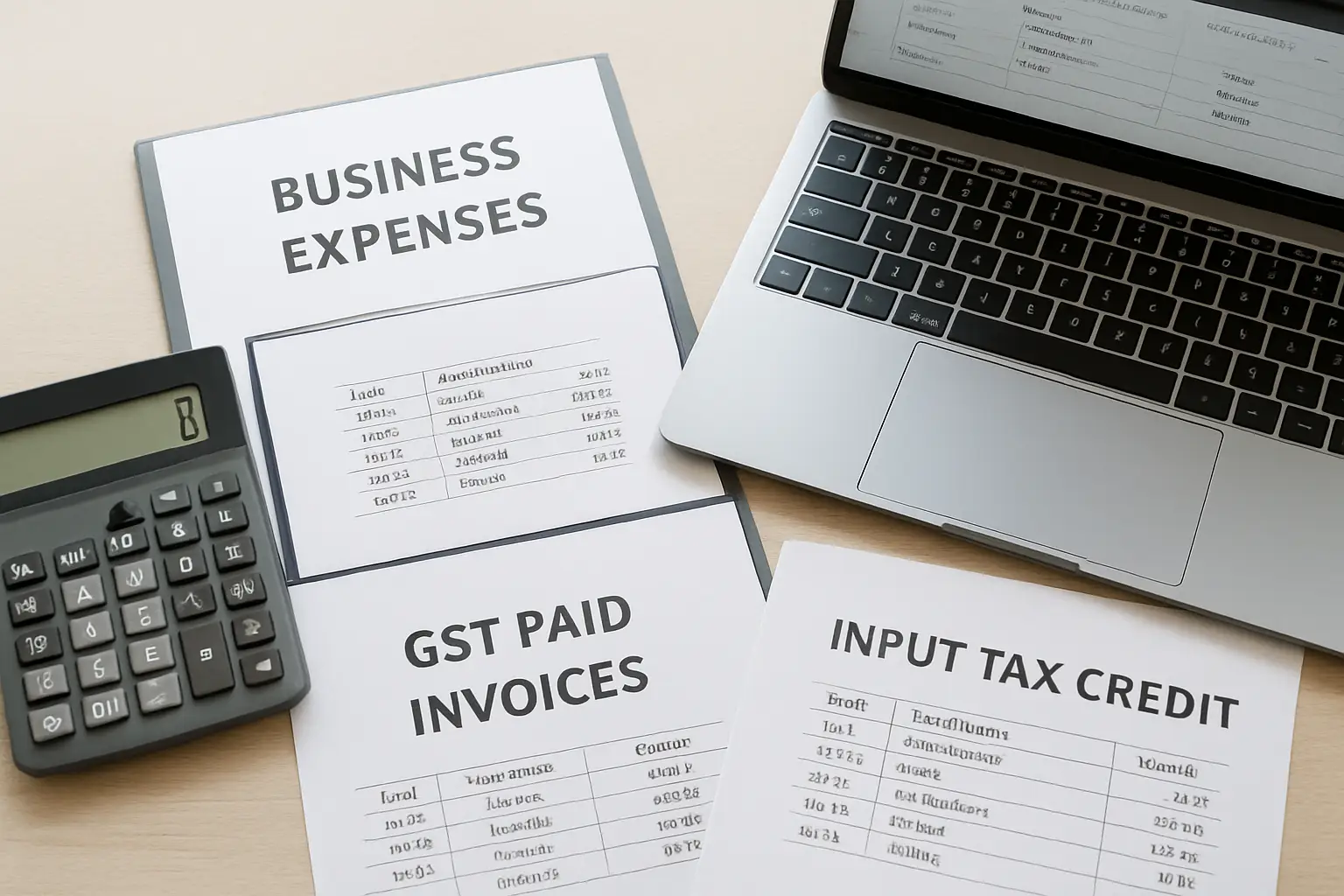
Registered businesses may be eligible to claim Input Tax Credits, or ITCs, for GST/HST paid or payable on purchases used in their commercial activities.

The challenge is often not knowing that ITCs exist. It is connecting each claim to suitable invoices, receipts, bookkeeping entries, and the business activity behind the purchase.

Expenses That May Need Review

  • Office and operating supplies
  • Software and subscriptions
  • Professional services
  • Equipment and business purchases
  • Vehicle costs where applicable
Receipts and GST paid on business expenses organized for Input Tax Credit review
GST/HST Filing Frequency

Monthly, Quarterly, and Annual GST/HST Filing

Your GST/HST account has a reporting period that determines how often a return must be prepared. Check the reporting period and due date that apply to your CRA account rather than assuming every business follows the same calendar.

Quarterly Filing

Quarterly filers report each three-month period. Filing and payment are generally due one month after the quarter ends.

  • Quarterly sales review
  • Expense and ITC reconciliation
  • Regular payment planning

Annual Filing

Annual filing deadlines depend on the type of registrant and fiscal year. Most annual business filers have different timing from certain self-employed individuals, so the account-specific deadline should be checked.

  • Fiscal year-end review
  • Annual return preparation
  • Possible instalment considerations
GST/HST regular method and Quick Method records being compared
Simplified GST/HST Reporting

GST/HST Quick Method Review

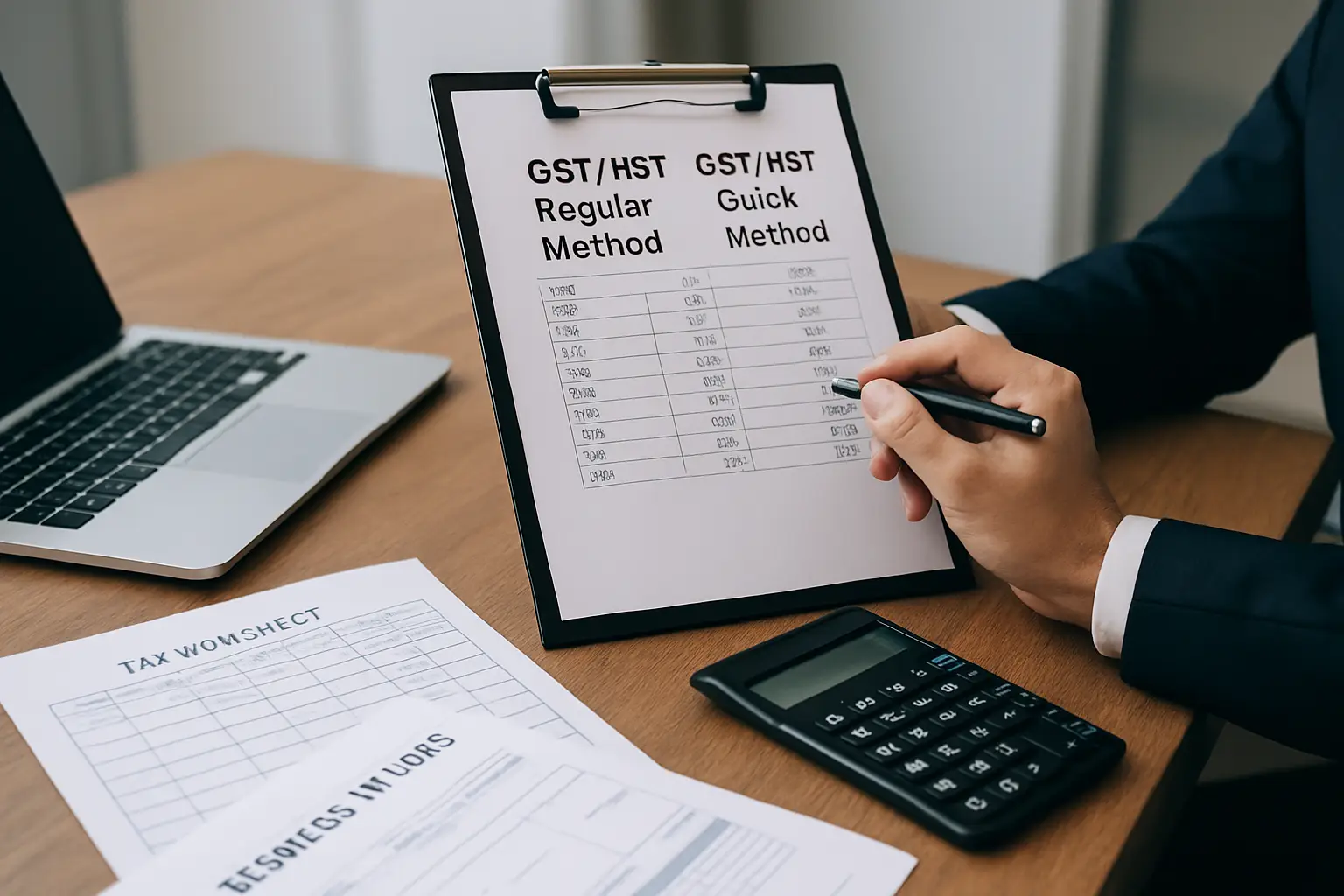
The Quick Method changes how an eligible business calculates the GST/HST it remits. Instead of claiming ITCs on most ordinary purchases, the business generally applies a prescribed remittance rate to qualifying revenue.

It is not automatically better or worse than the regular method. Eligibility, revenue, business type, purchases, capital assets, filing history, and the applicable remittance rate can all affect the result.

Questions to Review

  • Is the business eligible?
  • Has an election been made?
  • Which remittance rate applies?
  • Which purchases can still support ITCs?

Compare With the Regular Method

  • Tax collected
  • Eligible ITCs
  • Business purchases
  • Record-keeping requirements
GST/HST Reporting

Connect Sales, ITCs, Adjustments, and Net Tax

A GST/HST return should connect back to the business records. Sales, tax collected, eligible ITCs, adjustments, and the final amount should be supported by the records used to prepare the return.

02

Review Purchases and ITCs

Match eligible business purchases with invoices, receipts, expense records, and bookkeeping entries.

03

Prepare the Return

Bring the reporting period, sales information, GST/HST collected, ITCs, and relevant adjustments into the filing.

04

Keep Supporting Records

Maintain records that make it possible to trace amounts on the return back to the business transactions behind them.

Sales Classification

Zero-Rated and Exempt Sales Are Not the Same

Both can result in no GST/HST being collected from the customer, but their GST/HST treatment is different. That distinction can affect whether related Input Tax Credits may be available.

Taxable at 0%

Zero-Rated Sales

Zero-rated supplies are taxable supplies with a GST/HST rate of 0%. A registrant may still be eligible to claim ITCs on purchases used to make those supplies.

  • No GST/HST collected on the zero-rated supply
  • The supply remains taxable at 0%
  • Eligible related ITCs may still be available
Exempt

Exempt Sales

GST/HST does not apply to exempt supplies. Registrants generally cannot claim ITCs for GST/HST paid or payable on purchases used to make exempt supplies.

  • No GST/HST charged on the exempt supply
  • Different treatment from a zero-rated sale
  • Related ITCs are generally unavailable
Different Business Models

GST/HST Filing Needs by Business Type

The basic return may be the same, but the records behind it can look very different for contractors, retailers, restaurants, and professional service businesses.

Retail Businesses

Retail GST/HST records can involve point-of-sale reports, refunds, discounts, inventory purchases, operating expenses, and sales made to customers in different locations.

Restaurants and Cafes

Food businesses may need organized daily sales reports, supplier invoices, delivery-platform records, equipment purchases, rent, and other operating expenses.

Freelancers and Service Businesses

Consultants, contractors, designers, marketers, and other independent workers may need help connecting client invoices, platform income, expenses, and GST/HST records.

Explore Self-Employed Tax Services
GST/HST Support for Surrey Businesses

Phoenix Knight provides GST/HST filing support for businesses in Surrey. Learn more about accounting and tax services available through the Surrey service area .

CRA Questions and Reviews

Prepare GST/HST Records for CRA Review

If CRA asks about a GST/HST return, the business may need to support sales, tax collected, ITCs, adjustments, filing periods, and other reported amounts with source records.

Keeping the bookkeeping connected to invoices, receipts, bank transactions, and previous returns makes it easier to understand where each figure came from.

Records That May Be Relevant

  • Sales invoices and reports
  • Purchase invoices and receipts
  • Bank and credit card records
  • Previous GST/HST returns
  • Bookkeeping reports

When the Records Need Cleanup

Missing transactions or unreconciled accounts may need to be addressed before a return or CRA response can be supported.

Explore Bookkeeping Cleanup
Explore CRA Audit Assistance
GST/HST records being organized in response to CRA questions
GST/HST Filing Process

From Scattered Records to a Clearer GST/HST Return

A structured process helps identify registration questions, missing records, ITCs, and filing-period issues before the return is prepared.

01

Review Registration and Filing Status

Check the GST/HST account, reporting period, business activity, registration timing, and any outstanding periods.

02

Organize Sales and Expense Records

Review invoices, receipts, bank records, sales reports, bookkeeping, and previous GST/HST information.

03

Review GST/HST and ITCs

Bring together tax collected, eligible ITCs, adjustments, classifications, and other information for the reporting period.

04

Prepare the Return and Next Period

Prepare the filing information and identify bookkeeping or record-keeping changes that may make future periods easier.

GST/HST Filing FAQ

Common GST/HST Filing Questions From Surrey Businesses

Find clear answers about registration, Input Tax Credits, reporting periods, overdue returns, the Quick Method, and supporting records.

Surrey business owner reviewing GST/HST filing questions
When Does My Business Need GST/HST Registration?

For most businesses, CRA's $30,000 small-supplier threshold is calculated using worldwide taxable supplies, including zero-rated supplies, made by the business and its associates. If the total exceeds $30,000 in one calendar quarter, registration can become effective on the supply that causes the threshold to be exceeded. If the threshold is exceeded over the previous four consecutive calendar quarters but not in one quarter, the business generally stops being a small supplier at the end of the month following that quarter.

What Are Input Tax Credits?

Input Tax Credits may allow a GST/HST registrant to recover eligible GST/HST paid or payable on purchases used in commercial activities. Claims need to meet the applicable rules and should be supported by suitable records.

How Often Do GST/HST Returns Need to Be Filed?

A GST/HST reporting period may be monthly, quarterly, or annual. Monthly and quarterly returns are generally due one month after the reporting period. Annual deadlines depend on the registrant and fiscal year.

Can Phoenix Knight Help With an Overdue GST/HST Return?

Phoenix Knight can help organize sales, expenses, invoices, receipts, bookkeeping records, and previous filing information when a GST/HST period is behind.

Should My Business Use the GST/HST Quick Method?

The Quick Method may be available to eligible businesses, but whether it is suitable depends on the business's circumstances. Revenue, purchases, business type, ITCs, and the applicable remittance method should be reviewed first.

What Records Should I Keep for GST/HST Filing?

Useful records can include sales invoices, purchase receipts, bank and credit card statements, point-of-sale reports, bookkeeping reports, prior returns, and documents supporting Input Tax Credits and adjustments.

What Is the Difference Between Zero-Rated and Exempt Sales?

Zero-rated supplies are taxable at 0%, and eligible related ITCs may still be available. Exempt supplies are not subject to GST/HST, and related ITCs generally cannot be claimed.

Related Support

Related Tax and Accounting Services

GST/HST filing often connects with accounting, tax preparation, business records, and the way financial information is managed throughout the year.

Next Step

Get Your GST/HST Records and Filing Period Organized

Tell Phoenix Knight whether you need help with registration, a current return, an overdue period, ITC records, the Quick Method, bookkeeping, or a CRA question.

Your records do not need to be perfectly organized before making contact. Start with your sales records, expenses, previous returns, and the filing issue you already know about.

Surrey business owner discussing GST/HST filing records with Phoenix Knight Financial Services